
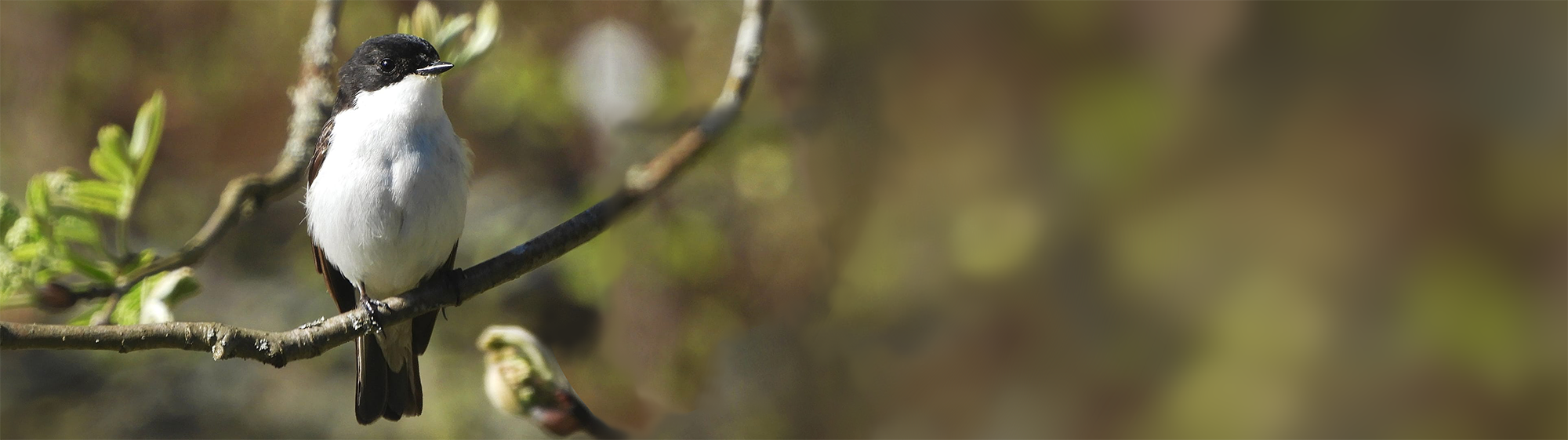
Our research focuses on the causes and consequences of variation in songs across individuals, populations, and species.
We use acoustic analysis, machine learning, behavioral experiments, population genetics, and neurogenomics. We are based in the Department of Zoology at Stockholm University.
Song variation across individuals
Songs vary across (and within) individuals. For example, a pied flycatcher male might produce songs containing between 20-50 distinct sounds, only some of which are shared by others from the same population.
Our current research uses a combination of acoustic analyses, playback experiments, and a variety of fitness-related traits to understand the factors (experience, genes, and condition) that underlie this variation and determining what information members of the same species could acquire by listening to one another’s songs.
Song variation across populations (and species)
Pied flycatchers breed throughout Europe. Songs vary geographically due to a combination of cultural evolution occurring within populations and isolation. Individuals from a given population preferentially respond to local songs, suggesting that song divergence could reduce social and sexual interactions across populations.
Our current research uses a combination of acoustic analysis, machine learning, and playback experiments to identify what types of song variants are particularly important for song responses. In addition, we are performing population genetics analyses to understand the links between song divergence and genetic isolation.


Neurogenomics of song discrimination
Song learning in birds depends on stimulation of auditory parts of the brain. Individuals from different populations (and species) are more likely to be stimulated by, and subsequently learn, songs from their own population. This suggests that genetic divergence across and within species
Our current research explores the genes and gene networks that are expressed in juvenile birds when exposed to songs. We compare across populations (and species) and manipulate experience to understand the complex interplay between genes and experience on song learning.
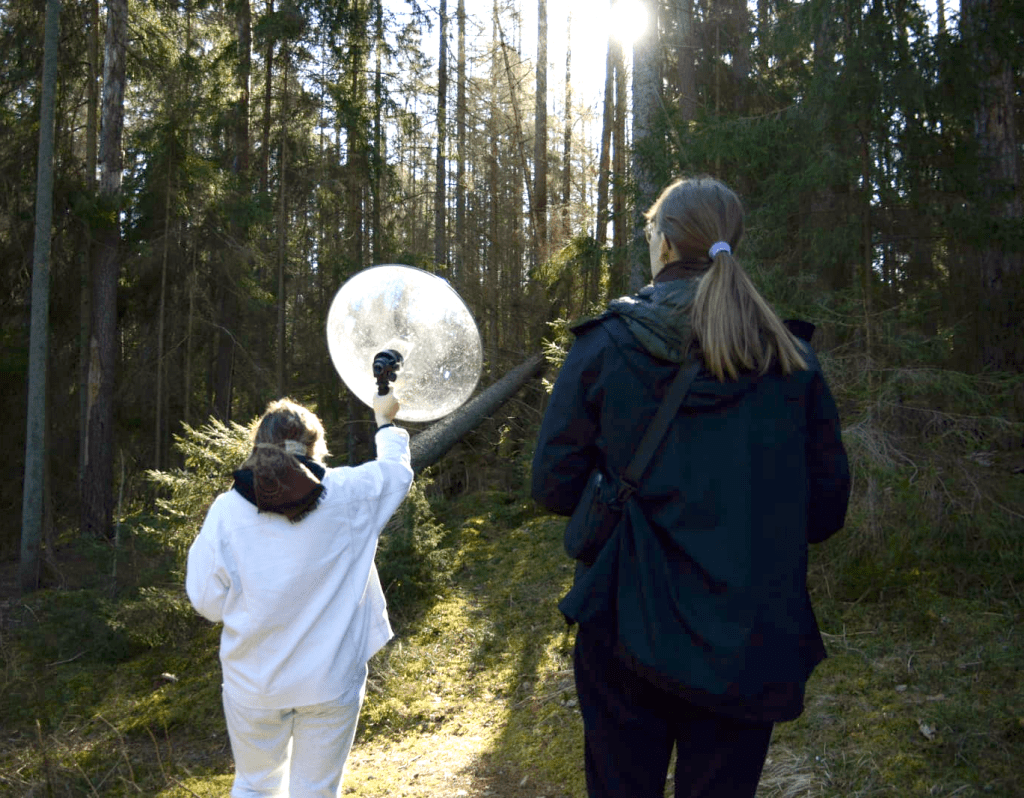
Field-based research
We conduct the majority of our field-based research at Tovetorp zoological research station in beautiful Södermanland.




Contact
Associate Professor David Wheatcroft
Department of Zoology
Stockholm University
Svante Arrhenius Väg 18B
114 18 Stockholm
david.wheatcroft@zoologi.su.se
 The Wheatcroft Lab